
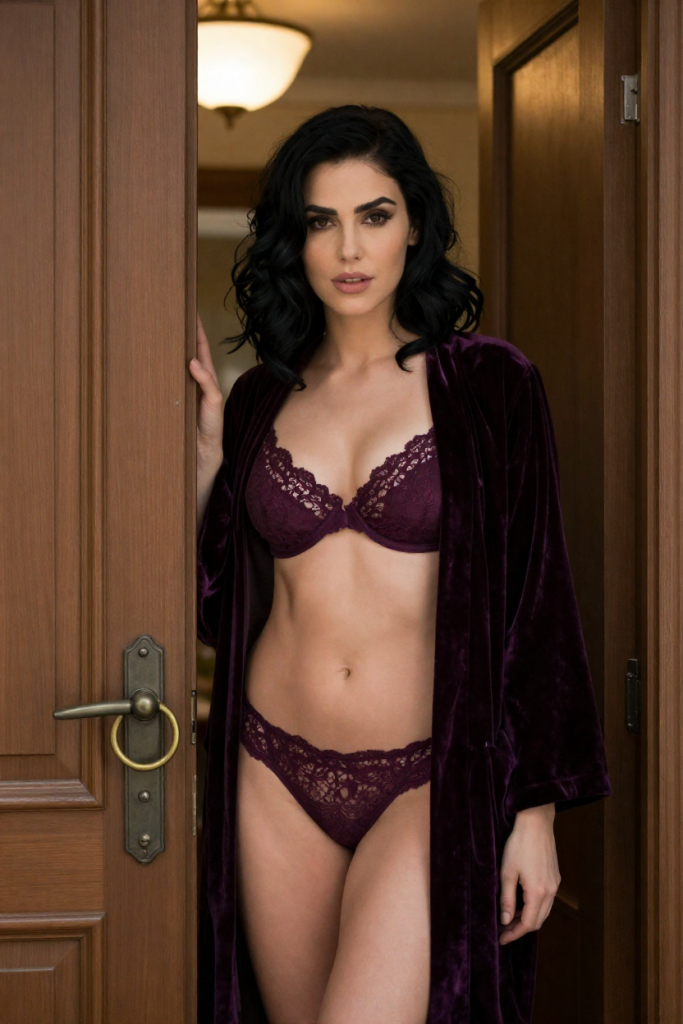
Ask a room of AI creators what ruined their last render and most will blame the model. Show them the prompt and the culprit is plainer: no light was ever specified, so the renderer averaged every photograph it had ever seen into a grey noon. Light is not a filter you apply afterwards. It is a clause you write, and it does more for a portrait than any other clause except the subject herself.
The three parts of a light clause
Source. Name a physical thing: a tall window, a work lamp, a lantern, foundry glow, dusk through an arch. Sources have sizes and personalities; “good lighting” has neither. Direction. From the left, from behind, from above. Direction is what carves a face out of a background — side light models cheekbones, back light rims hair and shoulders, top light shortens and dramatises. Temperature. Warm, amber, cool, violet dusk. Temperature is the emotional register of the frame, and it costs four words.
Match light to intent
Boudoir warmth wants a low, warm source and soft falloff: “warm lamp light from the left”. Editorial crispness wants a harder single source and contrast. Evening scenes want the temperature stated, because dusk unclaimed becomes mud. And consistency across a series means the light clause, like the look clause, gets pasted unchanged until you deliberately move the shoot to a new hour.
The one-line test
Read your brief and ask: could a painter set up this light from my words alone? If the answer needs an adjective you did not write, the clause is not finished. Finish it in the prompt, where it costs nothing, instead of in the editor, where it costs 21 credits and usually cannot be done at all.